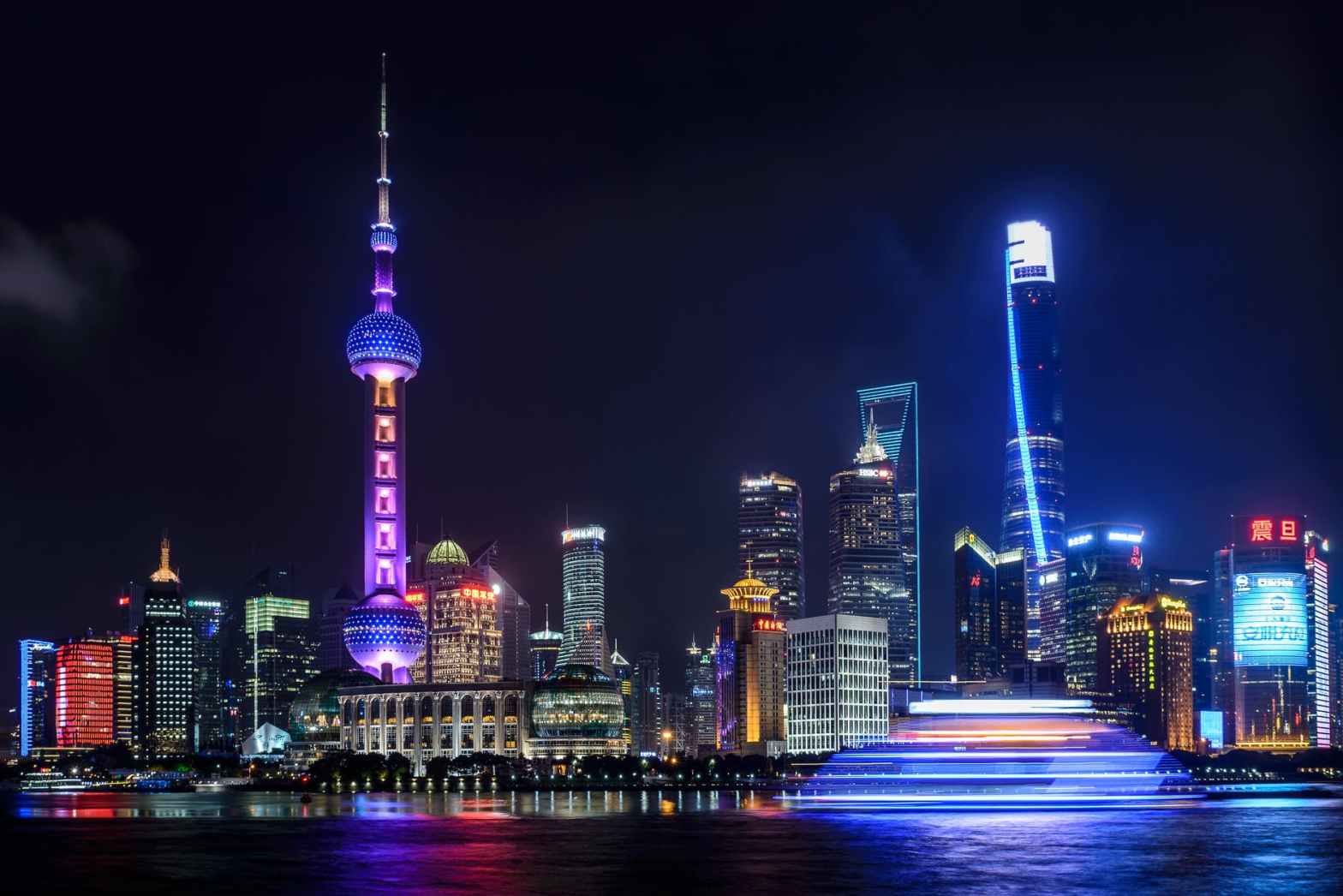
The Maglev experience
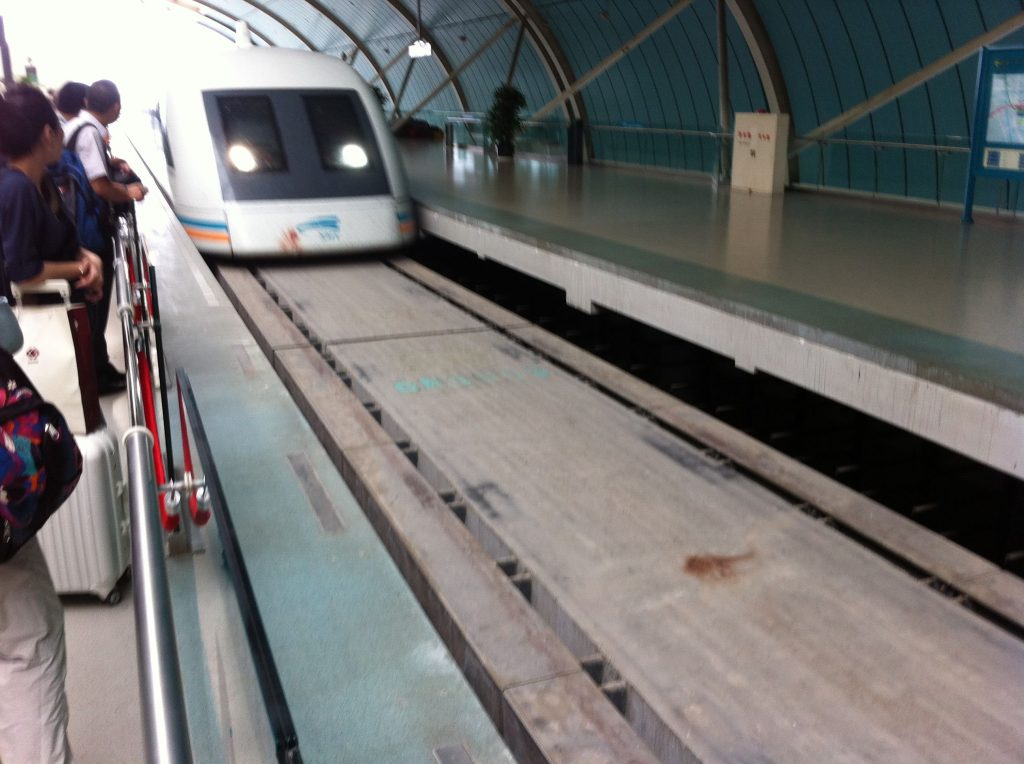
Another high point during my stay in Shanghai was taking a ride on the ‘Maglev’ train. It was at that time, and even today, the only ‘magnetic levitation train’ in service in the world. The highly powerful magnets in the system make the train float in the air and propel it forward.
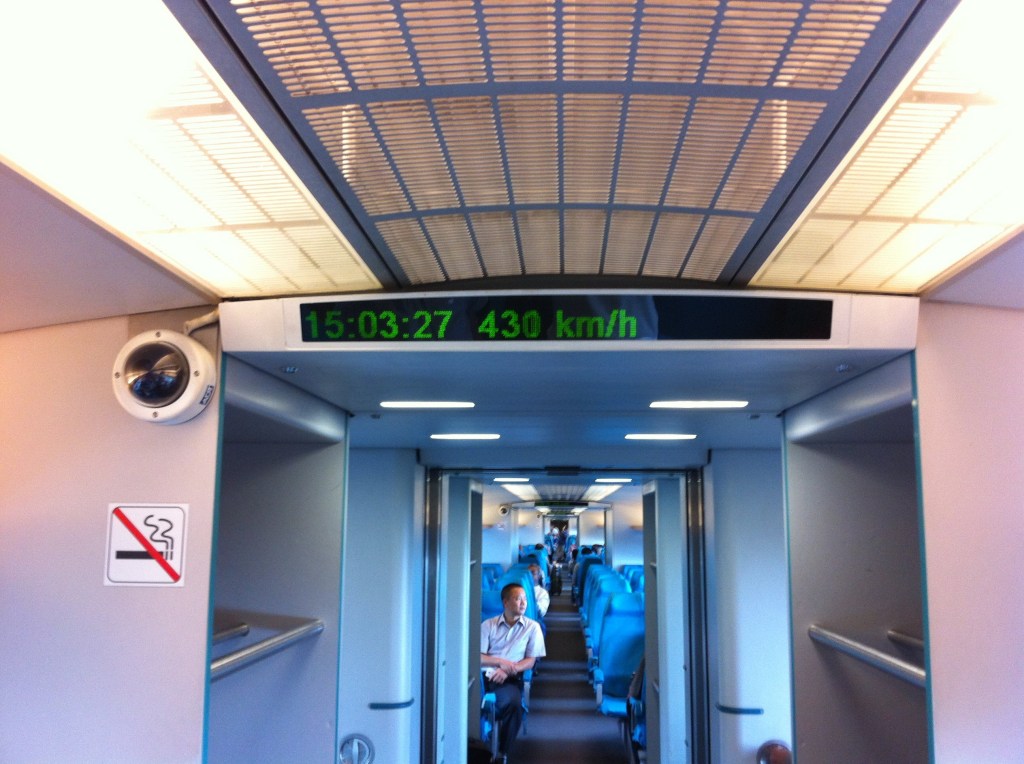
From the hotel, a cab took us to the Longyang Road station to board the maglev. The train connects Longyang road station to the Shanghai Pudong International Airport, set apart by 30 km. The train achieved its top speed of 431 km/h within a few minutes and completed the journey in around 7 and a half minutes. The train had few real passengers compared to the number of tourists. I later came to know from my colleague that this train service was running in losses, and its main purpose was to serve as a technology demonstrator, to show the Chinese ‘hard power’ before the world!
Visiting Hangzhou
We decided to utilize the longer stay during our second trip the best way we could by exploring places outside Shanghai during the weekend. Thus came the idea to visit Hangzhou, a city with much historical significance.
The journey began with us taking a taxi from our hotel to the nearest railway station to board the High-Speed train from Shanghai to our destination. The journey was pleasant with glimpses of rural China, sprawling with paddy fields, appearing between the cities we traversed. It was only the second time I travelled on a high-speed train, after the even faster maglev train in Shanghai of course.
After covering around 200 km in less than an hour we reached Hangzhou. We took a taxi and reached the famous West Lake, a UNESCO heritage site.
The West Lake is a large freshwater lake abutted with numerous temples, gardens, and pagodas. The Lake has artificial islands, boating facilities, and above all a serene aura that makes it popular among the locals too.
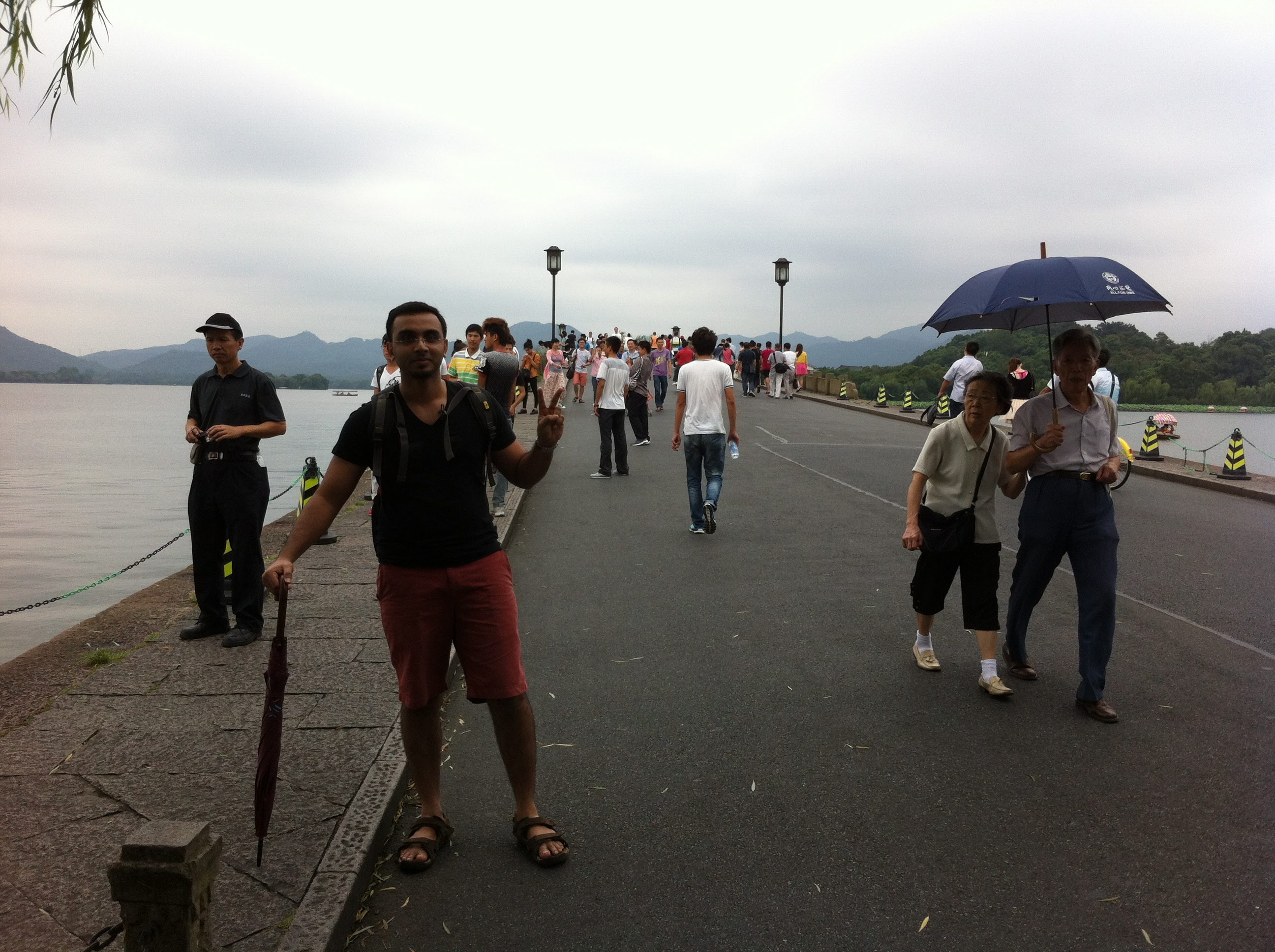
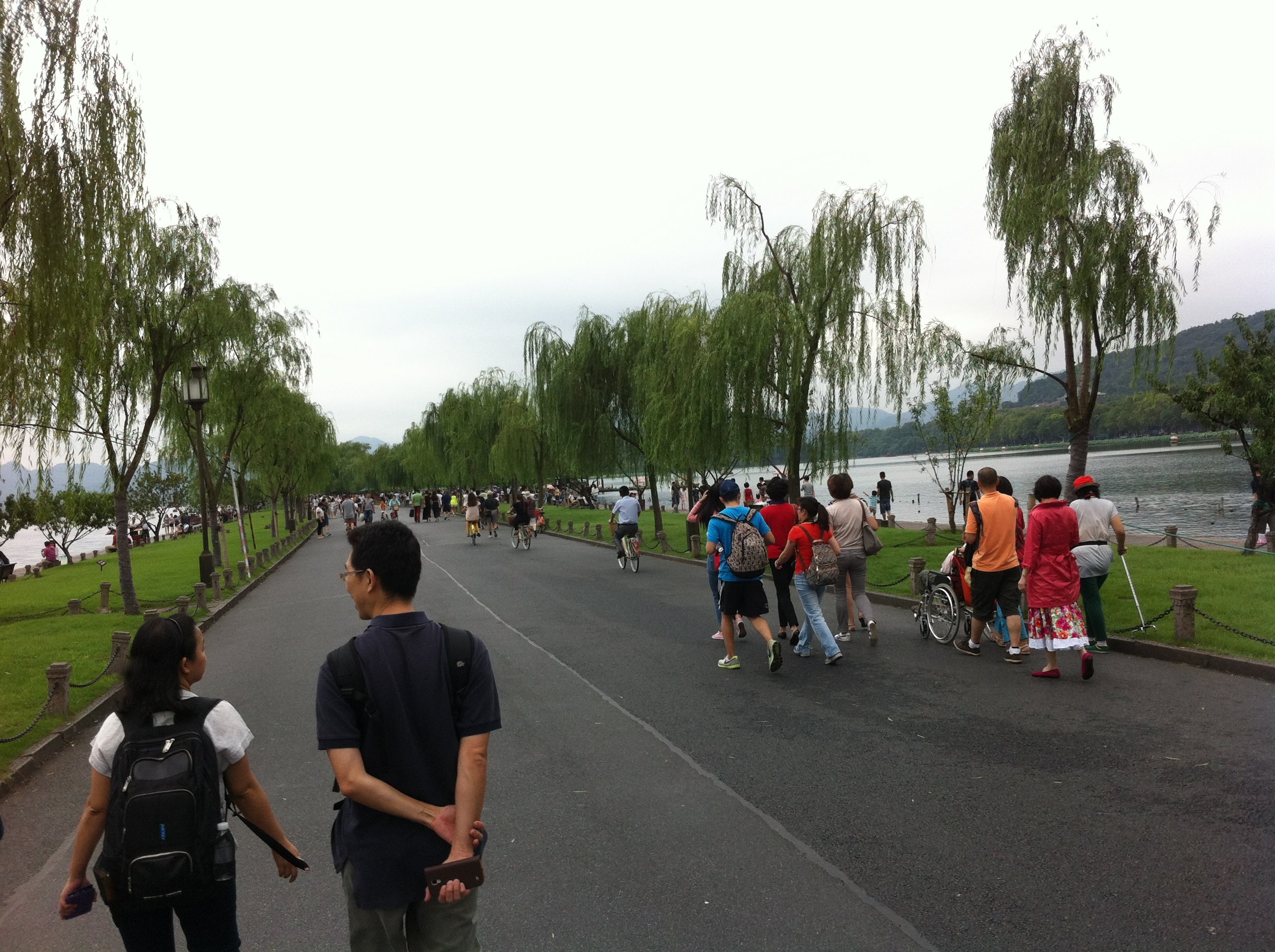
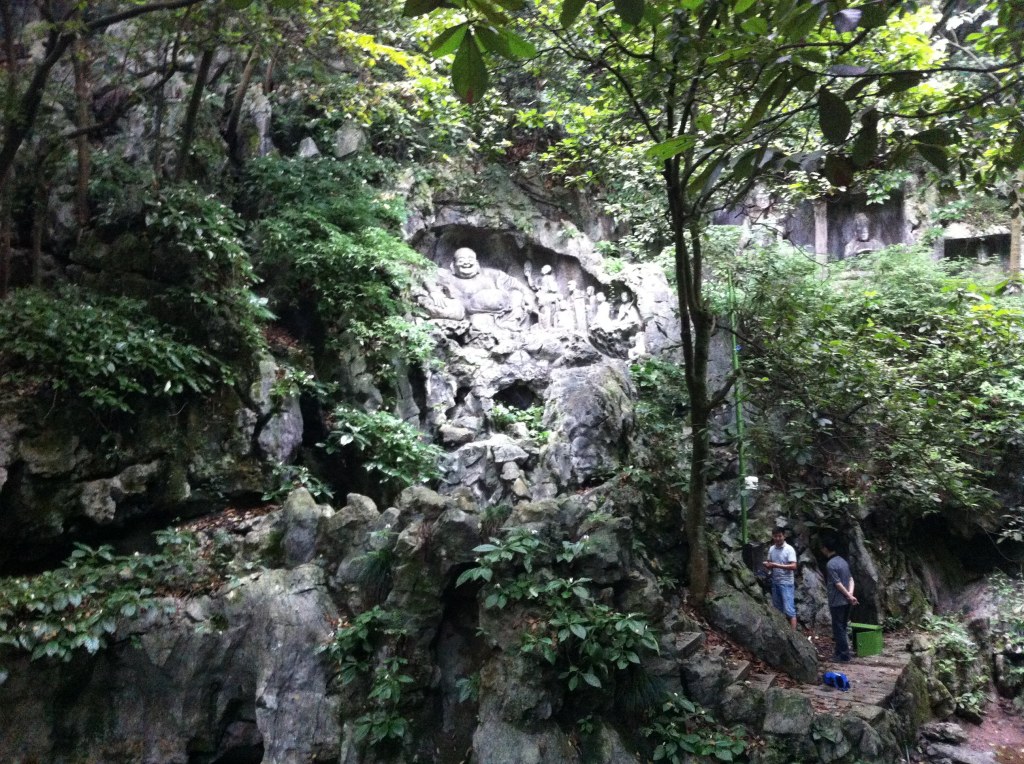
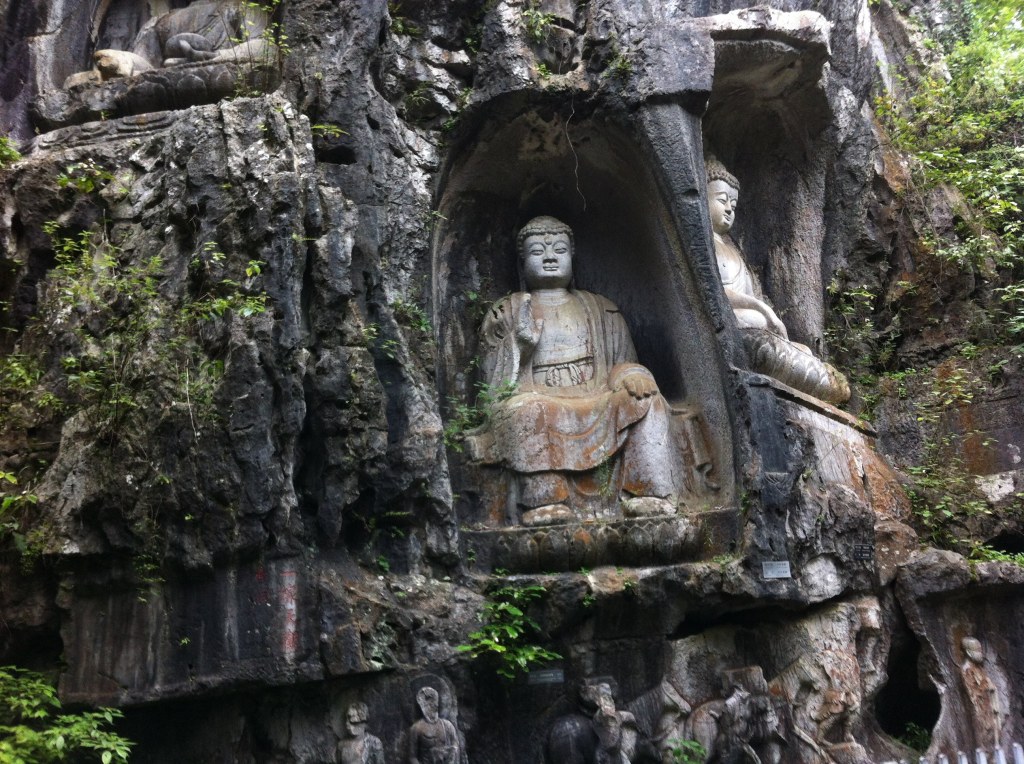
We took a stroll through the paved walkway adjoining the lake, enjoying its serene beauty. Soon we were heading to the Lingyin Temple, which is one of the largest Buddhist temples in this part of China. The path to this secluded temple was adorned with rock-cut Bodhisattvas and Buddha sculptures. This was probably the first time I was seeing Buddhist rock-cut sculptures of antiquity in my life and I was totally mesmerized by them. True to its name, it felt like a walk to the ‘Temple of the Soul’s Retreat’.
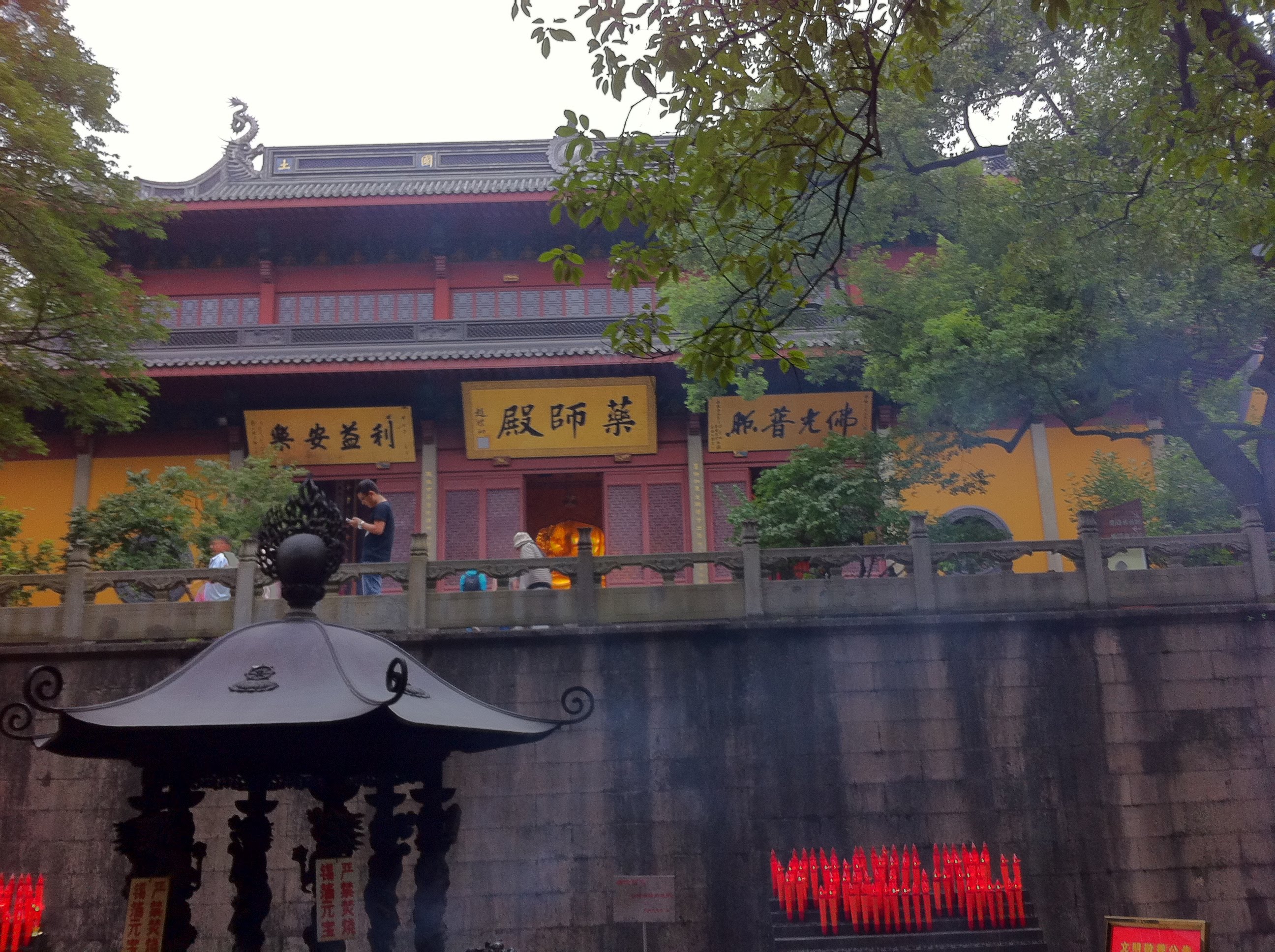
As soon as one reaches the temple’s main entrance one would see numerous platforms for lighting candles and incense sticks. The entrance is no doubt majestic, with the peculiar Chinese style of architecture all around the temple. After spending some time immersing ourselves in the aura of the place, we decided to continue our journey.
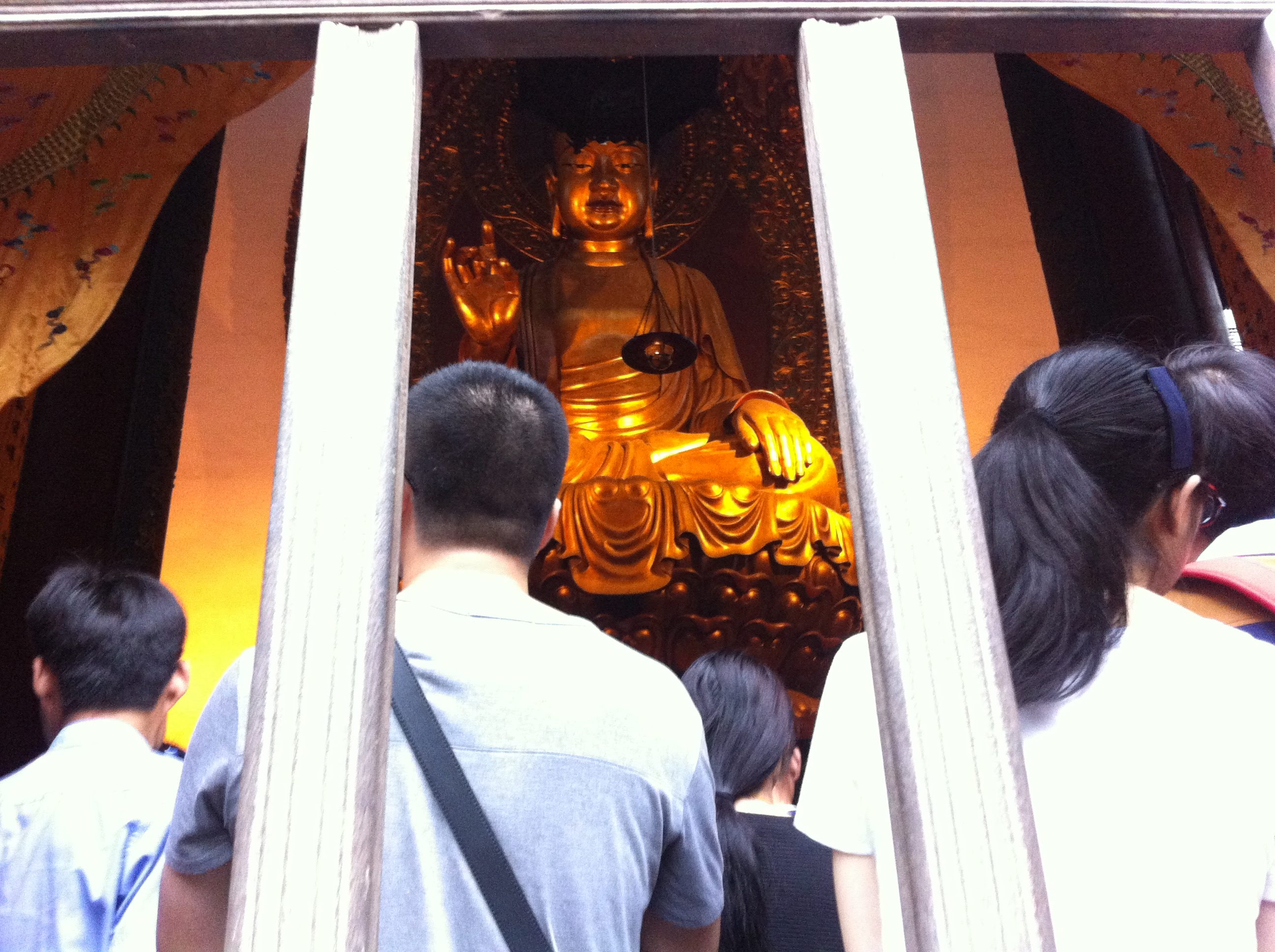
Our next item on the list was the Yu Fei temple, built in honor of Yu Fei, a general of the Southern Song dynasty. The majestic entrance of the temple leads to a climb of wide stairs with statues of several warriors and nobles on either side of the stairs. Inside the temple stood a large-sized statue of Yu Fei himself. The temple also houses the tomb of the great warrior. I remember being perplexed and struggling to place the story in the right context as I had very little knowledge of Chinese civilization’s history!

After visiting the various places of interest around the lake, we decided to catch the next train back to Shanghai. By then it was almost 4 pm and we had already taken our lunches from the KFC shop in the vicinity of the park. The train journey back was a quick affair and an uneventful one. Worn out from the long walks and the travel back and forth from the city, I had to settle for an early bedtime.
At Shanghai Museum
I decided to spend the next day exploring the famous museum in the city. Situated at the People’s square it houses many artifacts of Chinese art and culture, giving us a snapshot of Chinese civilizational history.
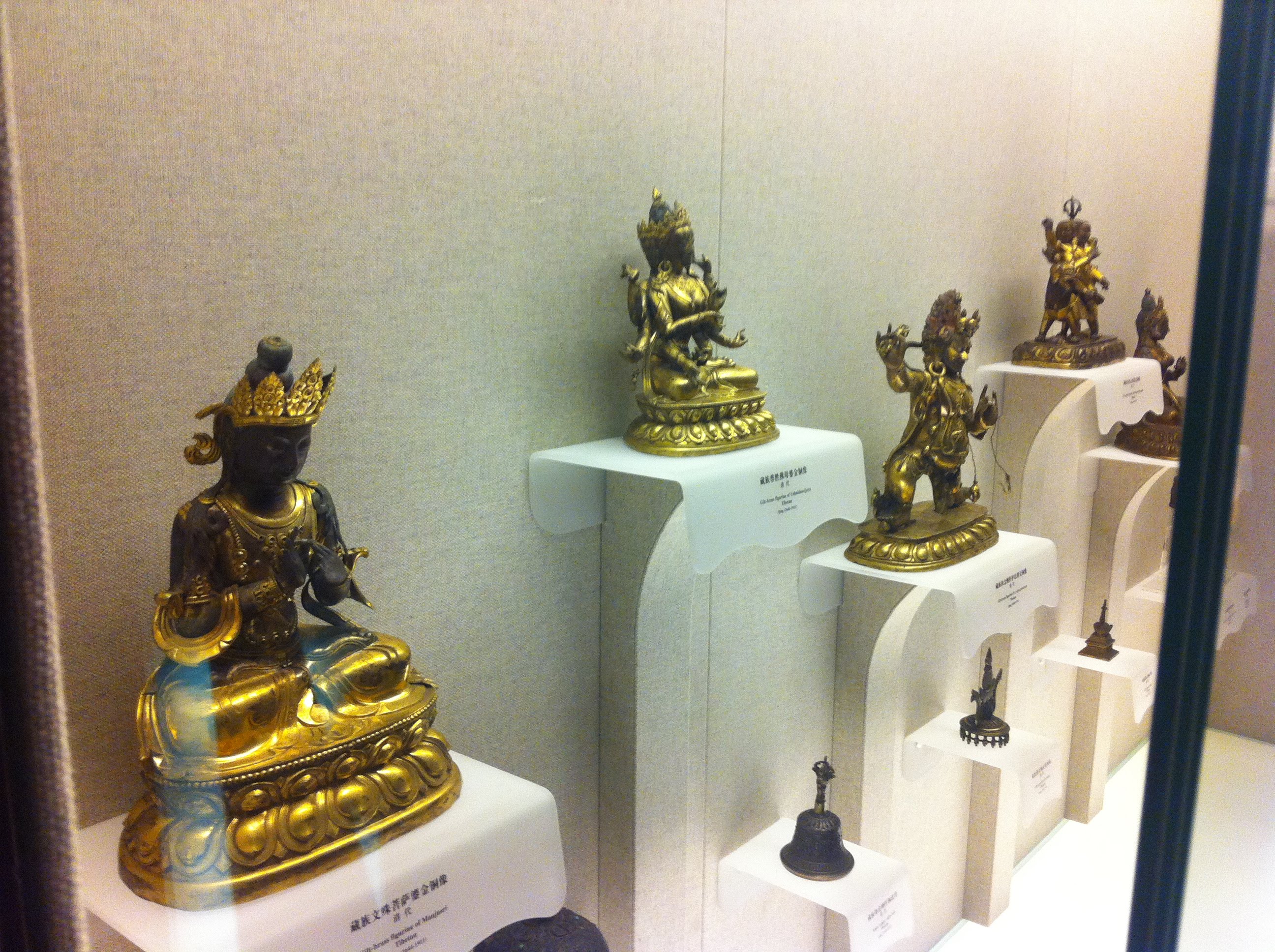
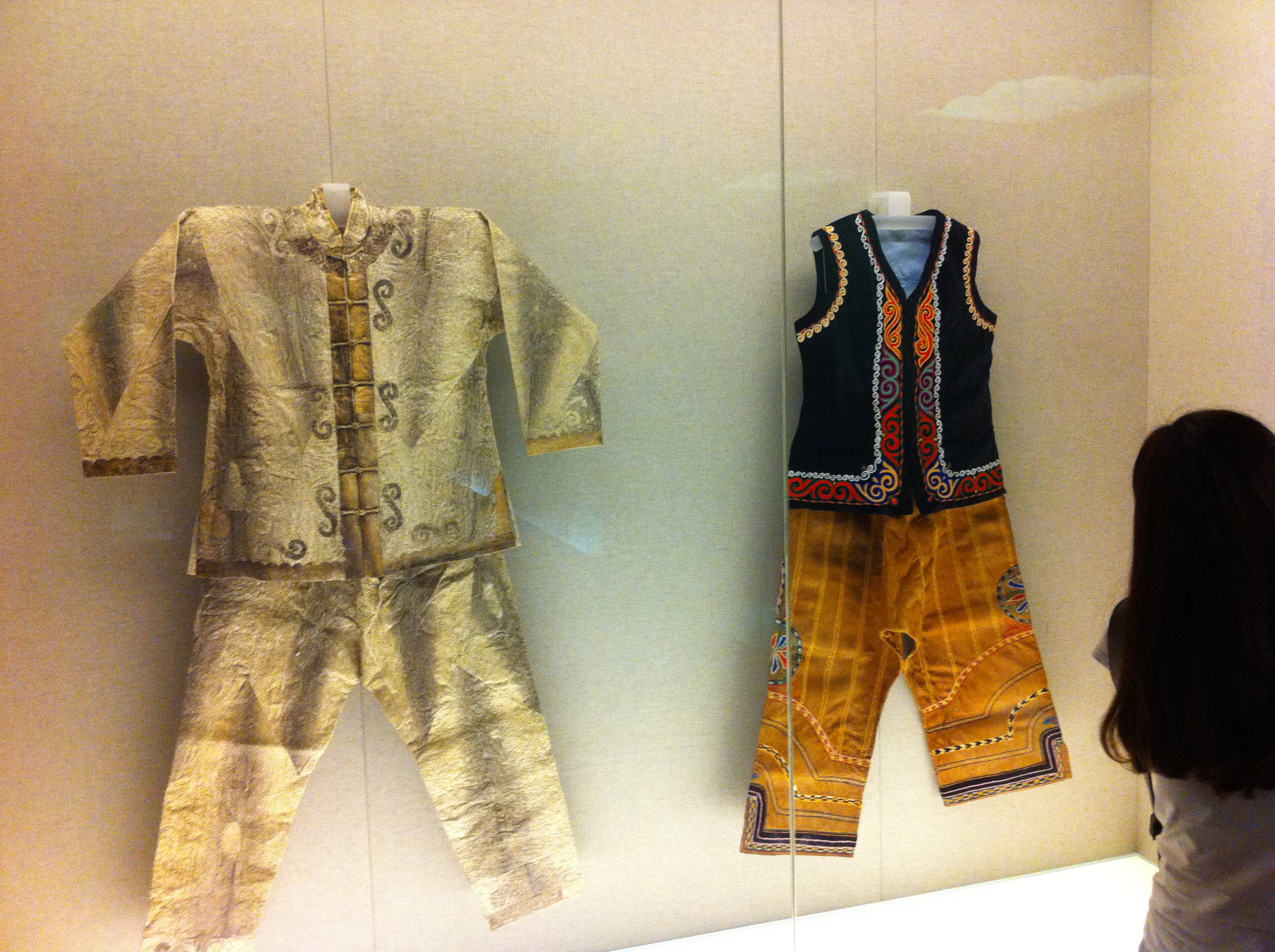
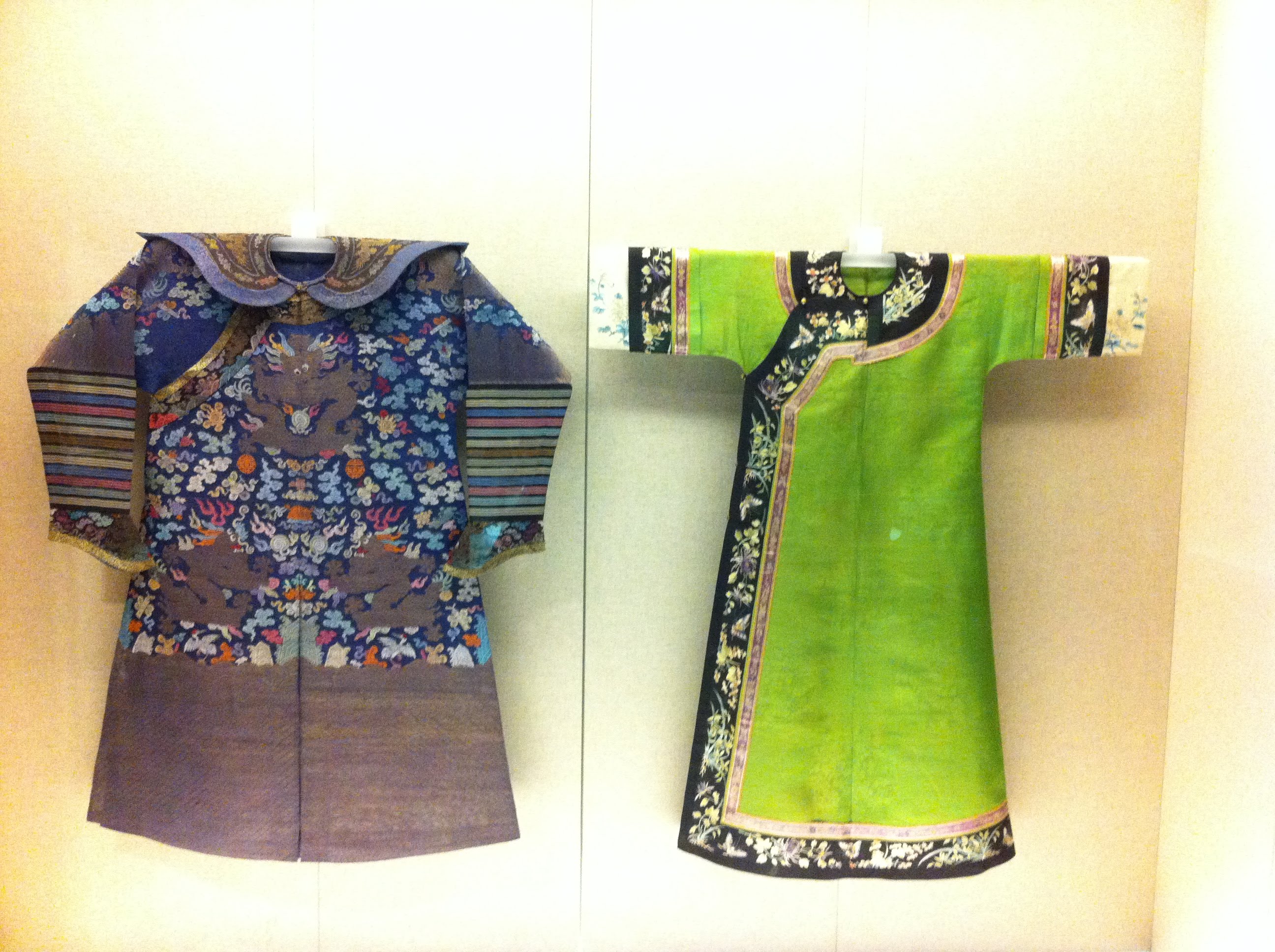
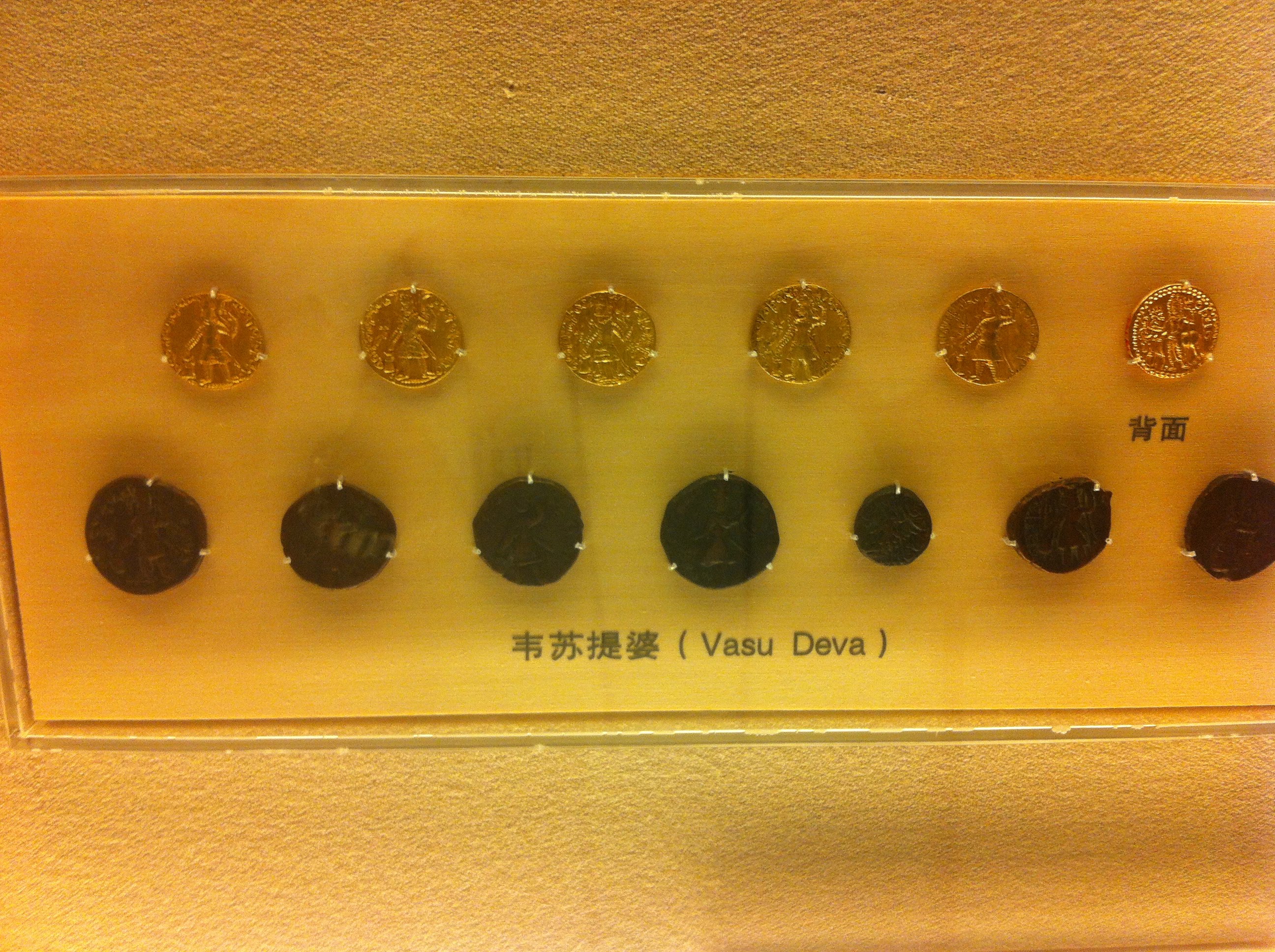
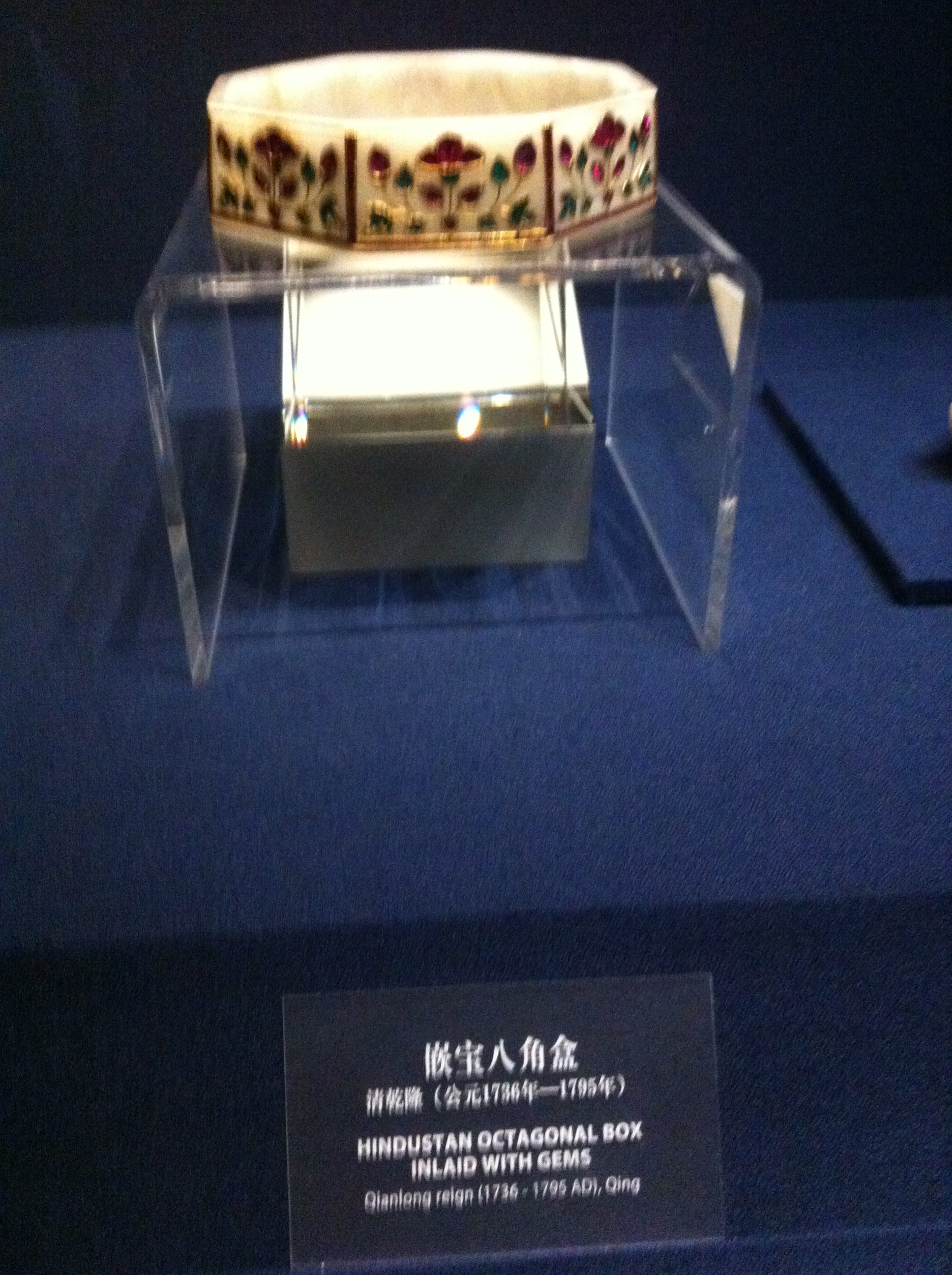
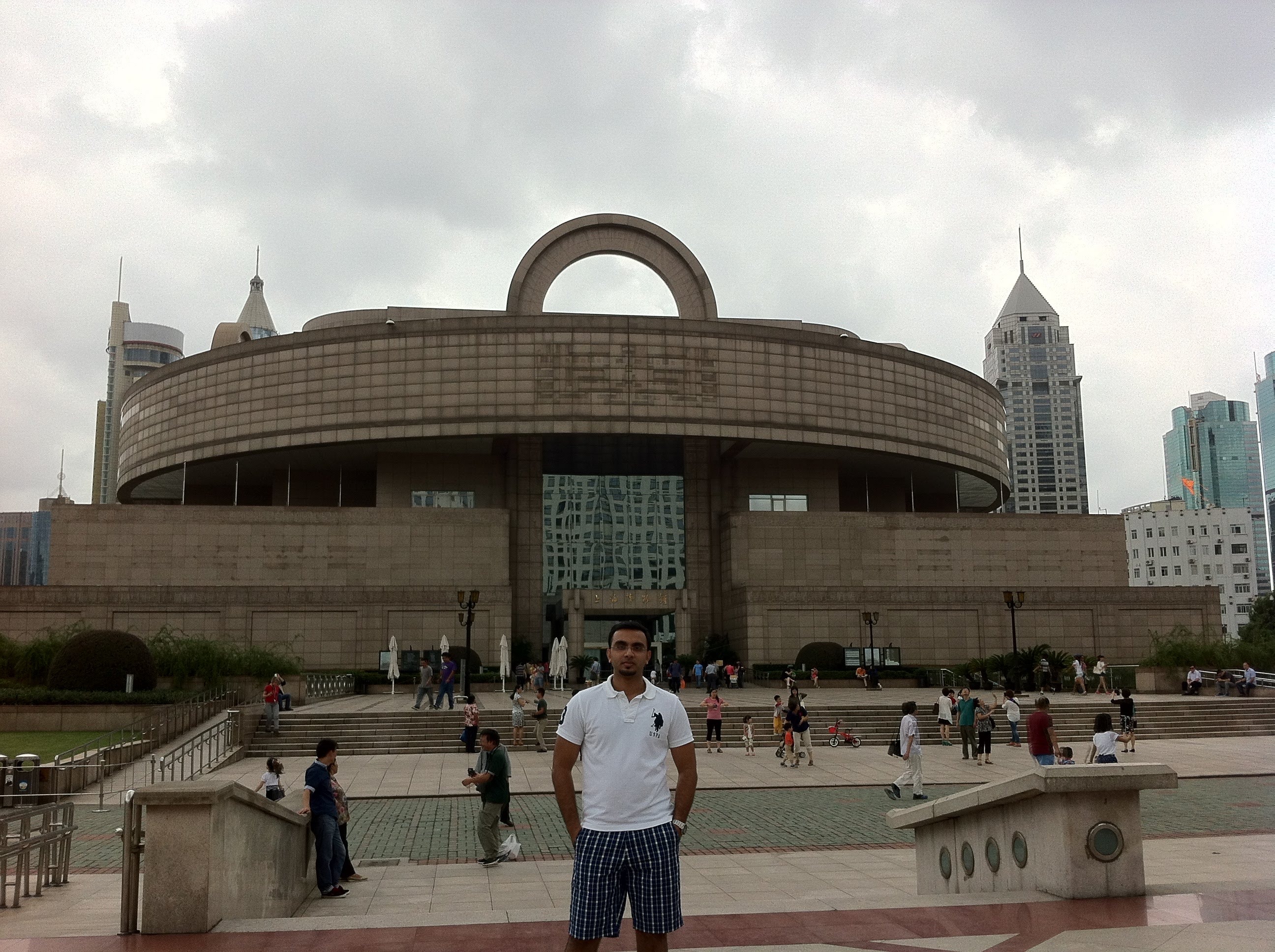
The Museum had a vast collection of sculptures, numismatics, paintings, calligraphy, jades, etc – around 120,000 precious works of art in 21 different categories. To maneuver through this and make sense of it, I borrowed an audio tour from the museum. Though this certainly helped, it was still a challenge to understand the enormity of the history surrounding every object in the building. I recommend this museum to everyone who visits the city. Even if you are not a history buff, the variety of Chinese culture – from Xinjiang to Fujian – that you see here would thrill you.
From taking the underground trains every evening to visit random spots in Shanghai, to exploring the ancient civilizational roots of the country, the stay in China was indeed a different experience. As an Indian, the warmth and respect of the local Chinese I met at the office, in the streets such as the Nanjing road, at the Muslim restaurant where we had our dinner every day, etc. is something that I will cherish forever. With the satisfaction from time well spent, I packed my bags and boarded the Bangkok flight to join my family.
 Mahesh MS